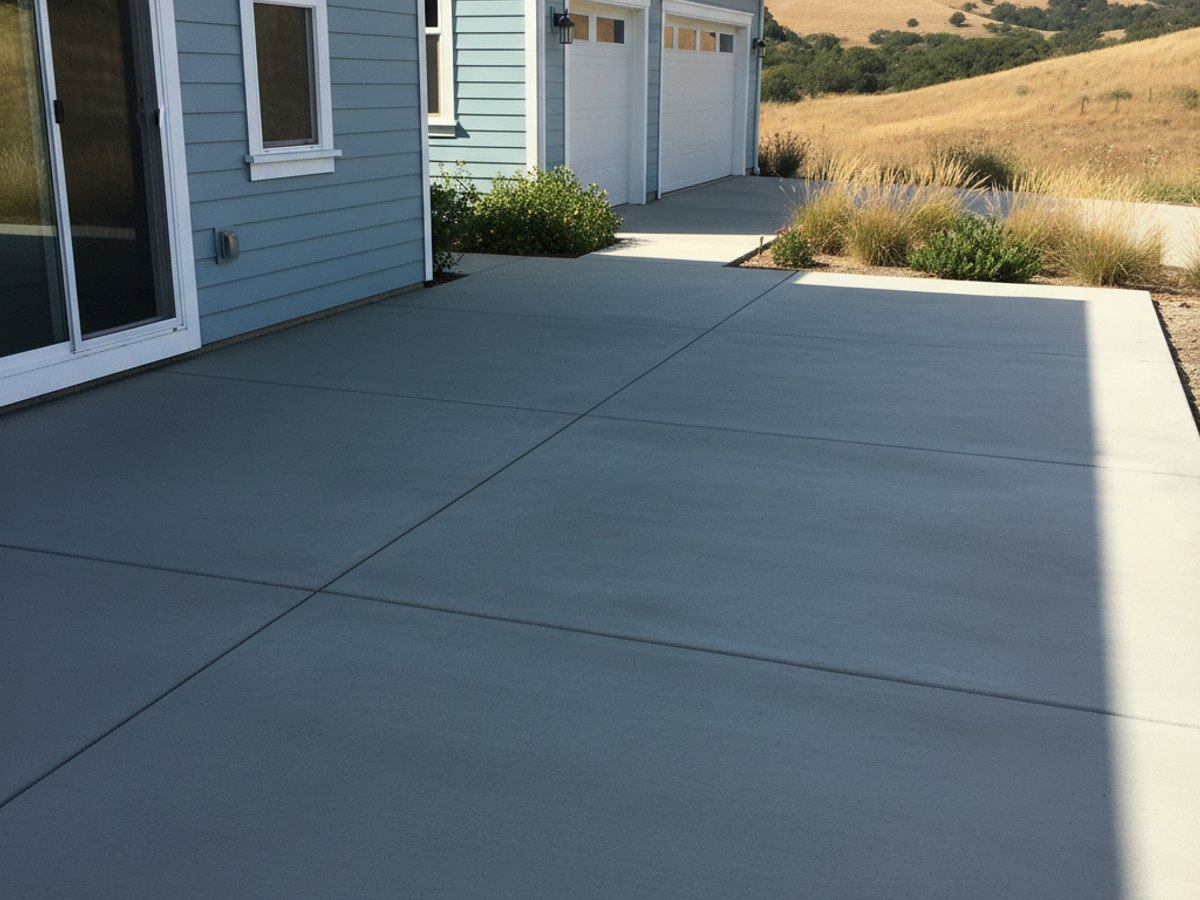
Concrete looks simple once it's down. Gray, flat, done. Getting it to stay that way in Los Angeles takes a few checks most homeowners never think to ask about until the slab cracks, pools water, or the city flags it two years in. Here's what actually matters before anyone pours.
What's under the yard
Los Angeles doesn't have one soil type, it has a dozen. Parts of the Valley and areas like Chatsworth and Sylmar sit on expansive clay that swells when it's wet and shrinks hard when it dries out over the summer. That movement is what cracks patios and driveways that were poured without enough base or without any joints cut into them. Closer to the coast, around Venice and Marina del Rey, you get sandy soil and a water table that can sit a few feet down, which changes how a footing or a foundation slab needs to be prepped. If nobody's told you what's under your lot, ask for a simple soil assessment before you agree to a price. A contractor who skips this on a driveway over clay is setting you up for the same crack pattern within a couple of dry seasons.
Old street versus new subdivision
A lot of LA's housing stock went in between the 1920s and the 1960s. Neighborhoods like Eagle Rock and Highland Park have plain concrete flatwork from that era with no steel in it at all, just unreinforced slab, and when you tie new concrete into it you're often matching something that's already settled unevenly. Newer subdivisions out toward Valencia or Santa Clarita were built on engineered fill under current code, so the ground is more predictable, but the pad may still need compaction testing before anything gets poured on it.
Water has to go somewhere
LA gets most of its rain between November and March, and it tends to come in bursts rather than steady days of drizzle. A patio or driveway that's dead flat, or worse, pitched toward the house, will pond in a downpour and send water straight at the foundation. Concrete should slope away from the house at roughly 1/4 inch per foot, about a 2% grade. Check where your downspouts and any existing drains dump out before a new slab goes in, because once it's poured you can't easily fix the slope without breaking it back out.
Permits, setbacks, and what's buried out there
The City of Los Angeles Department of Building and Safety handles permits for most slab work, including foundations and retaining walls over a certain height. Sidewalk and driveway apron work that touches the public right of way usually involves the Bureau of Street Services too, since that strip technically belongs to the city, not you. If your project is near the property line, a setback check matters, especially for a new driveway or a retaining wall, and if you're in a planned community like Porter Ranch or Valencia with an HOA, they'll have their own approval step on top of the city's. Before any digging starts, call 811 to get utility lines marked. Gas, water, and electrical runs under LA yards aren't always where the old plans say they are, especially on a lot that's been added onto a few times since the 1950s.
What's actually going into the slab
This is the part that's easy to shortcut and hard to see once it's covered. A standard driveway slab in this area runs about 4 inches thick, more like 5 to 6 inches if it's going to carry a lot of vehicle weight or sit over soft fill. Reinforcement matters more here than people assume: wire mesh is cheaper but it's really there for crack control, while rebar, typically #3 or #4 bar set around 18 inches on center, is what you want under anything structural or over expansive clay. Control joints should go in every 8 to 10 feet, cut within the first 24 hours after the pour, before the slab decides on its own where it's going to crack. Ask what psi mix is being used, too. A lot of driveway work in LA calls for a 4,000 to 5,000 psi mix, and a contractor quoting a cheaper 3,000 psi mix on a driveway is cutting a corner you won't notice until it's cracked under a car.
Timing and curing
Heat is the other local factor people underestimate. In July and August, slab temperatures can climb fast enough that the surface dries before the concrete underneath has set properly, which leads to crazing and a weaker top layer. A crew working in that heat should be wetting the surface or using a curing compound, not just walking away after the finish. Full strength takes about 28 days no matter the season, but you can usually walk on a new slab after 24 to 48 hours and drive on it after about a week, longer if it's been poured during a heat wave. Santa Ana wind events in the fall can dry a fresh pour out just as fast as summer heat does, so timing a pour around the forecast, not just the calendar, is worth asking your contractor about.
A short list worth going through before you sign anything
- Soil type and whether a compaction or expansive-clay check has been done
- Slope and where the water will actually drain
- Who's pulling the permit, the city or you
- Whether utility lines have been marked
- Slab thickness and whether it's rebar or mesh
- PSI rating of the mix
- Where control joints will be cut and when
- How many days until you can park on it
- Whether the pour date accounts for heat or wind in the forecast
- Whether an HOA or setback review applies to your property
None of this is complicated, it's just easy to skip when you're focused on how the finished patio or driveway is going to look. Get these answered up front and the finish takes care of itself. If you want someone to walk through your soil, your drainage, and your permit situation before pricing the job, that's the groundwork we start every project with at Allied Concrete Solutions.