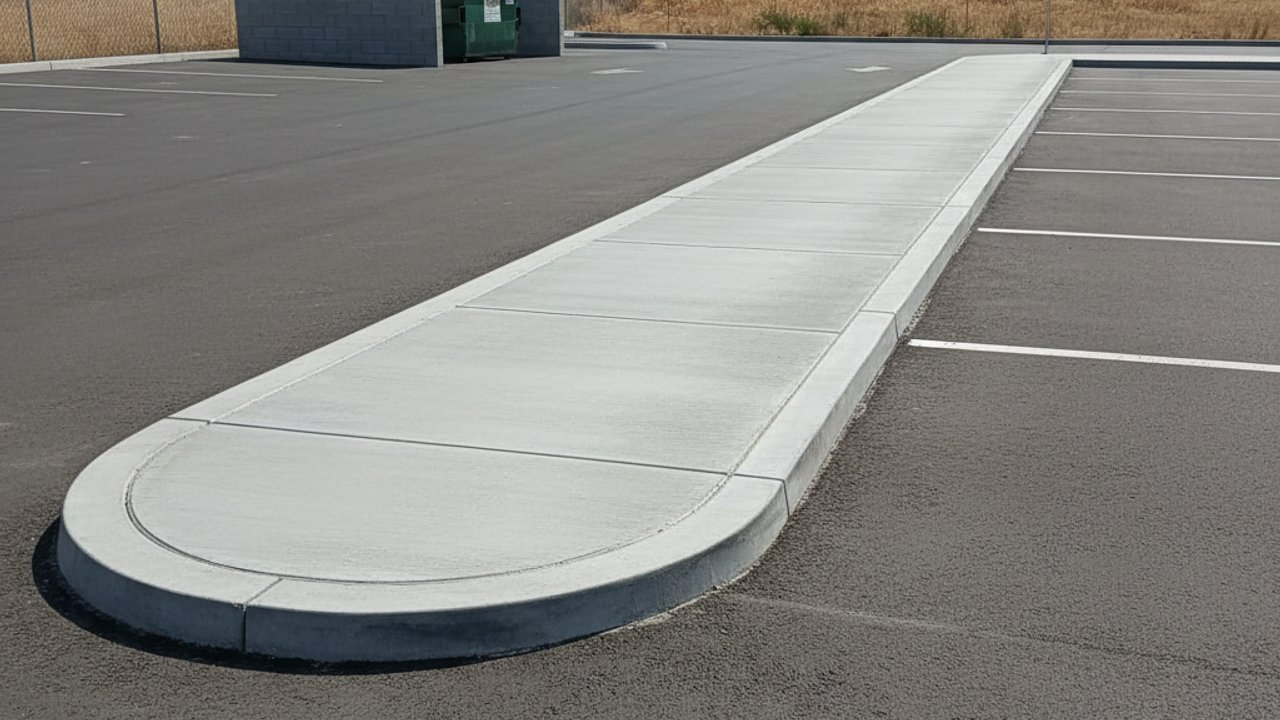
Concrete work looks simple from the sidewalk. Somebody pours gray stuff, it sits for a while, it gets hard. What actually separates a driveway that lasts 30 years from one that's cracked into checkerboard pieces by year five happens underneath, before the truck even shows up. Most homeowners can't see that part, which is exactly why some contractors skip it.
This isn't a pitch for one job or another. Whether you're getting a patio poured in Sherman Oaks or a retaining wall built into a hillside lot in Eagle Rock, the same questions decide whether you get a good result or a lawsuit waiting to happen.
Ask about the license before you ask about the price
In California, a concrete contractor doing flatwork, foundations, or retaining walls needs a C-8 license from the Contractors State License Board, or in some cases a general B license if the concrete is part of a bigger structural job. You can look up any license number on the CSLB site in about thirty seconds and see whether it's active, whether there's a bond behind it, and whether there's a history of complaints. A contractor who hesitates when you ask for that number, or hands you a number that comes back suspended, is telling you something. Don't argue with them about it. Just move to the next bid.
Ask about workers' comp insurance too. If a crew member gets hurt on your driveway pour and there's no coverage, the claim can land on your homeowner's policy. A legitimate outfit carries it and will show you the certificate without being asked twice.
Read the bid for what it says about thickness and base
A bid that just says "pour new driveway, $X" is not a bid, it's a guess. A real one specifies the slab thickness, and that number should change depending on what the concrete has to carry. A standard patio or walkway runs 4 inches. A driveway that sees a car and a trash truck backing over the apron should be 5 to 6 inches, especially near the street where the city right-of-way work happens.
Below the slab, there should be 4 inches of compacted aggregate base, not bare dirt. Skipping that base is the single most common shortcut in this trade, because it's invisible once the concrete goes down and it saves a contractor real money on labor and material. It's also the reason so many LA driveways settle unevenly within a few years, especially over fill soil in the Valley or reclaimed lots near the wash.
Reinforcement matters just as much. Patios and walkways are usually fine with 6x6 welded wire mesh. Driveways and anything carrying vehicle loads should get rebar, typically #3 or #4 bar on an 18-inch grid, tied and lifted on chairs so it actually sits in the middle of the pour instead of resting on the dirt. Mesh that never gets pulled up during the pour is doing nothing.
What Los Angeles ground and weather actually do to concrete
LA doesn't have freeze-thaw cycles, which is one less thing working against a slab compared to concrete in colder climates. What we do have is expansive clay soil through large parts of the Valley, Pasadena, and Altadena, the kind that swells when it's wet and shrinks hard when it dries out. That movement under a slab is what causes cracking and heaving over time if the base prep and drainage weren't handled right. Closer to the coast, in Venice or Santa Monica, the soil is sandier and drains faster, which is a different problem: it can settle and compact unevenly if it wasn't properly compacted before the pour.
Rain here is concentrated into a handful of months, roughly November through March, and lately it comes in short, hard atmospheric river dumps rather than steady drizzle. A driveway or patio needs a slope of at least 2 percent away from the house, or you're looking at water pooling against the foundation every winter. On a lot with a garage below street level, this is not optional, it's the difference between a dry garage and a wet one every February.
Summer heat changes the pour itself. On a 95-degree August day, fresh concrete can lose surface moisture faster than it can gain strength, which leads to plastic shrinkage cracking, those fine hairline cracks that show up within hours. A contractor who knows what they're doing will pour early morning in summer, keep the slab damp with curing compound or wet burlap, and won't rush a crew through a pour just to beat the heat of the day.
Older neighborhoods versus newer subdivisions
A slab job in Highland Park or Leimert Park, where the houses date to the 1920s through the 1940s, usually means dealing with what's already in the ground: old sewer laterals, tree roots from mature parkway ficus and elms that have been heaving the existing walkway for years, and sometimes concrete with no rebar in it at all. Removing that old slab and finding what's underneath is part of the job, not an unexpected add-on, and a contractor should say so upfront rather than surprising you with a change order.
In newer subdivisions out toward Santa Clarita or Porter Ranch, the ground was engineered and compacted before the tract was built, and many homes sit on post-tensioned slab foundations. Repair work there is a different animal, because cutting into a post-tensioned slab without knowing where the cables run can be dangerous and expensive to fix. If a contractor is going near an existing foundation slab in one of these neighborhoods, ask whether they've checked for post-tension cables first.
Permits, and why the answer isn't always LADBS
Most structural concrete work, foundations and retaining walls over 4 feet, goes through the Los Angeles Department of Building and Safety, with inspections at the footing, rebar placement, and final stages. But if the work touches the sidewalk, curb, or driveway apron in the public right-of-way, that permit usually comes from the LA Bureau of Engineering instead, not LADBS. A contractor who's done work in the city knows this distinction cold. One who looks confused when you ask hasn't pulled many permits here.
HOAs are common in the newer hillside and planned communities, less so in the older flat neighborhoods, so ask early if yours has design review requirements for things like stamped patterns or wall height.
The walk-away signs
Walk away from a bid with no thickness or rebar spec. Walk away from anyone who wants full payment upfront, in California a contractor can legally ask for a deposit but it's capped, and a large cash-only request before work starts is a bad sign. Walk away from a crew that wants to pour over your old cracked slab instead of removing it, unless they can explain exactly why that's structurally sound in your case. And be wary of a quote that's dramatically lower than three others, because that gap usually comes out of the base prep or the rebar, and you won't see it until the cracks show up in year two.
A good contractor will talk through all of this without being pushed, because it's just the job. If you want to see how our concrete contractor work handles the prep, the reinforcement, and the drainage on jobs across LA, that's the conversation worth having before anyone shows up with a mixer.